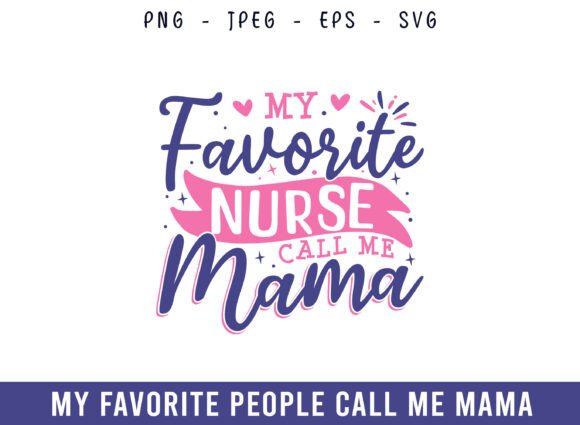
My Favorite Nurse Call Me Mama Design Review
As a professional embroidery digitizer and product reviewer, I approach every new graphic with a specific question: will this actually stitch out cleanly on real fabric? When evaluating the My Favorite Nurse Call Me Mama Design, my focus shifts immediately from the screen to the hoop. This design targets a highly specific and passionate niche—the nurse mom—and carries significant emotional weight. For Etsy sellers, craft business owners, and apparel decorators, this isn't just another Mother’s Day asset; it is a potential bestseller that bridges professional pride with maternal identity. However, because it combines text with thematic elements, its success depends entirely on how well the vector shapes translate into physical stitches.
First Impressions and Visual Hierarchy
Upon opening the file, the first thing I assess is the balance between the "Nurse" identity and the "Mama" sentiment. The description notes that this SVG is made with 100% vector shapes and is fully resizable. From a design perspective, this is excellent news for versatility, but it requires careful handling during the digitizing or conversion process. Vectors are mathematically perfect, but thread has thickness. The visual personality of this design feels warm yet professional, avoiding overly cutesy caricatures in favor of a clean, readable aesthetic that respects the nursing profession.
The layout suggests a stacked or integrated composition where the medical symbolism supports rather than overshadows the family message. For a machine embroidery design, this hierarchy is crucial. If the stethoscope or cap details are too intricate, they risk becoming muddy blobs when stitched at smaller sizes. Conversely, if the text is too thin, it may get lost on textured fabrics like fleece or terry cloth. My initial assessment is that this graphic has strong bones for a sweatshirt embroidery project or a left-chest placement on scrubs, provided the digitizer respects the minimum line width requirements for satin columns.
Real-World Application: The Custom Sweatshirt Test
To truly evaluate this asset, I mentally placed it in a real-life production scenario: creating a custom crewneck sweatshirt for a boutique holiday collection targeting hospital staff. In this context, the My Favorite Nurse Call Me Mama Design needs to perform as a centerpiece. Sweatshirts are typically made of cotton-poly blends with a brushed interior, which can be tricky for detailed fill stitch areas.
In this application, I would prioritize legibility over complexity. Because the design allows for easy color changes, I tested the concept against both white and dark navy backgrounds. On white, high-contrast thread colors make the design pop, allowing for lighter density fills. On dark garments, however, the strategy must shift. Dark fabrics absorb light, making designs appear smaller. For a dark sweatshirt, I would recommend adding a subtle knockdown stitch or a light background fill behind the text elements to ensure the "Call Me Mama" portion remains crisp. This adaptability makes it a valuable digital embroidery file for shops that offer multiple garment options without needing separate digitized versions for every color variation.
Critical Considerations for Fabric and Hoop Size
While vectors are infinitely scalable, embroidery is not. There are distinct limitations you must respect when using this design across different products. Here is where practical judgment overrides digital perfection:
- Small Hoop Sizes and Baby Items: If adapting this for baby embroidery or onesies, extreme caution is needed. Reducing a complex nurse-themed design to fit a 4x4 hoop often compromises small details like facial features or tiny text serifs. Always check the minimum recommended size before stitching on infant wear.
- Textured Fabrics: For tea towels or tote bags, the fabric texture competes with the design. A standard running stitch outline might disappear into the weave of a linen towel. You may need to increase stitch density or add an underlay to create a smooth foundation.
- Stretchy Knits: When applying this to performance scrubs or stretchy t-shirts, stabilizer choice is non-negotiable. The design’s vector precision will distort if the fabric shifts. Use a cut-away stabilizer and consider a water-soluble topping to prevent stitches from sinking into the knit.
- Curved Surfaces: Caps present unique challenges. If the design is tall or vertically oriented, it may not fit the curved frame of a hat without distortion. Always test on a curved surface mockup before committing to a commercial embroidery run on headwear.
Impact on Product Value and Customer Trust
For Etsy sellers and handmade shop owners, the quality of your stitch-out directly correlates to customer trust. A nurse is a detail-oriented professional; she will notice if the alignment is off or if the lettering looks amateurish. Using the My Favorite Nurse Call Me Mama Design correctly signals that you understand her dual identity. When the stitch density is optimized and the thread colors are chosen to complement rather than clash, the finished product feels premium.
This design also offers significant value for personalized gift creators. Because it is vector-based, you can easily modify elements (within licensing terms) to add names or graduation years, transforming a standard graphic into a bespoke keepsake. This customization capability increases the perceived value of the item and encourages repeat business. However, professionalism extends beyond the stitch. Ensure your printable mockup accurately represents the final texture. Customers appreciate seeing a realistic preview of how the embroidery will look on their chosen garment, which reduces returns and builds brand consistency.
Designer Notes for Successful Execution
Before loading this design into your machine for a client order or shop stock, adhere to these practical protocols:
- Verify Licensing: The product description mentions commercial viability, but always double-check the specific license terms included with your download. Confirm whether you can sell the physical embroidered items, the digital files, or both. Protecting your craft business starts with compliance.
- Test Stitch on Scrap: Never assume the auto-digitize function handled the vectors perfectly. Run a test on scrap fabric similar to your final project. Inspect the registration marks and text clarity.
- Check Thread Contrast: View the design in black and white within your software to check value contrast. If the nurse cap and the text are similar values, they will blend together in monochrome embroidery. Adjust shading or outlines to maintain separation.
- Stabilizer Audit: Match your stabilizer to the fabric weight. Lightweight knits need different support than denim aprons. The right stabilizer prevents puckering, which is the enemy of a professional finished product.
- Mockup Validation: Create mockups on both light and dark backgrounds. Since the design promotes easy color changing, showcase this versatility in your listing photos to attract buyers looking for specific uniform-matching colors.
Final Verdict for Makers
The My Favorite Nurse Call Me Mama Design is a robust asset for the embroidery community, offering the flexibility needed for diverse applications from tote bag design to apparel. Its vector foundation provides the scalability required for modern crafting, but its success relies on the maker's technical diligence. By respecting fabric limitations, optimizing stitch types for the medium, and maintaining high standards of execution, this design can become a staple in your catalog. It resonates because it honors a specific lifestyle, and when executed with care, it delivers the quality that nurse moms deserve.